Buy spcnetwork.eu ?
We are moving the project
spcnetwork.eu .
Are you interested in purchasing the domain
spcnetwork.eu ?
domain@kv-gmbh.de · 0541-91531010
Buy spcnetwork.eu ?
What does acid-catalyzed mean?
Acid-catalyzed refers to a chemical reaction that is facilitated or sped up by the presence of an acid. In these reactions, the acid acts as a catalyst, meaning it helps lower the activation energy required for the reaction to occur. This allows the reaction to proceed at a faster rate than it would without the acid catalyst. Acid-catalyzed reactions are commonly used in organic chemistry to synthesize various compounds. **
What is an enzymatically catalyzed reaction?
An enzymatically catalyzed reaction is a chemical reaction that is facilitated and accelerated by an enzyme. Enzymes are biological molecules that act as catalysts, speeding up the rate of chemical reactions without being consumed in the process. Enzymes achieve this by lowering the activation energy required for the reaction to occur, making it easier for the reaction to take place. Enzymes are highly specific, meaning they only catalyze specific reactions and interact with specific substrates. **


Similar search terms for Catalyzed
Top-Angebote
Products related to Catalyzed:
-
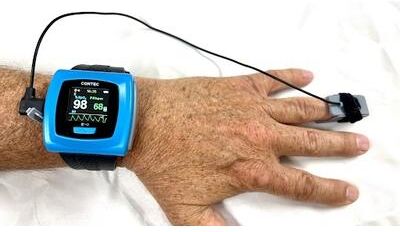
Concord Health Supply Wrist-Worn Pulse Oximeter with Digital Software Download and Download Cable""" Rechargeable Wrist-Worn Pulse Oximeter The wrist pulse oximeter features a color, multi-direction OLED screen with four levels of brightness. The easy-to-read color OLED display can be adjusted to be readable either horizontally or vertically. The..."109,00 $*Shipping: 0,00 $Secure redirect to the provider
-
Nonin Medical Nonin WristOx2 Starter Kit 3150SK USB Wrist-Worn Pulse Oximeter with nVision software and download cable""" Find this product at a lower published price from another authorized dealer? Give us a call: we will beat the price and give you a free fingertip pulse oximeter with your purchase. WristOx2 3150SK Wrist-Worn Pulse Oximeter Starter Kit A small,..."1199,00 $*Shipping: 0,00 $Secure redirect to the provider
-
Graco Oasis Swing + Soothe Surround Technology - LandryNothing is better than Mom, but the Graco Soothe Surround technology mimics time-tested, proven methods that parents use to soothe their little ones within our Oasis Swing. Soothe Surround recreates these soothing techniques, like the middle of the...129,99 $*Shipping: 0,00 $Secure redirect to the provider
-
Chengdu Menghejia Technology Co., Ltd. Tent GoldTent Pegs set includes 20 x Tent Pegs, 1 x Hexagon socket, 1 x Tent peg puller, 1 x Portable carrying case. The camping pegs are 20cm long and 8mm in diameter, with thread details for stronger grip and adaptability to various surfaces Chengdu Menghejia Technology Co., Ltd.92,99 £*Shipping: 0,00 £Secure redirect to the provider



-
How does base-catalyzed hemiacetal formation occur?
Base-catalyzed hemiacetal formation occurs through a nucleophilic attack of the hydroxyl group of an alcohol on the carbonyl carbon of an aldehyde or ketone. The base deprotonates the hydroxyl group, making it a better nucleophile, which then attacks the electrophilic carbonyl carbon. This forms a tetrahedral intermediate, which then collapses to form the hemiacetal product. The base also helps in deprotonating the newly formed alcohol group, stabilizing the hemiacetal product. **
-
What are the principles of enzyme-catalyzed reactions?
Enzyme-catalyzed reactions follow several key principles. First, enzymes are highly specific, meaning they catalyze specific reactions with specific substrates. Second, enzymes lower the activation energy required for a reaction to occur, making the reaction proceed faster. Third, enzymes are not consumed in the reaction and can be used repeatedly. Lastly, enzymes can be regulated by factors such as pH, temperature, and the presence of inhibitors or activators to control the rate of the reaction. **
-
How does the base-catalyzed hemiacetal formation occur?
Base-catalyzed hemiacetal formation occurs through a nucleophilic attack of the hydroxyl group of an alcohol on the carbonyl carbon of an aldehyde or ketone. The base deprotonates the alcohol, making it a better nucleophile. The nucleophilic oxygen then attacks the electrophilic carbonyl carbon, leading to the formation of a tetrahedral intermediate. Finally, proton transfer and elimination of the leaving group result in the formation of the hemiacetal product. **
-
What is the kinetic description of enzyme-catalyzed reactions?
The kinetic description of enzyme-catalyzed reactions involves studying the rate at which the reaction occurs and the factors that influence this rate. Enzymes increase the rate of a reaction by lowering the activation energy required for the reaction to proceed. This is achieved by forming an enzyme-substrate complex, which stabilizes the transition state of the reaction. The kinetics of enzyme-catalyzed reactions can be described using parameters such as the Michaelis-Menten constant (Km) and the maximum reaction rate (Vmax). **


Why does life on Earth require enzymatically catalyzed metabolic reactions?
Life on Earth requires enzymatically catalyzed metabolic reactions because enzymes are essential for speeding up chemical reactions that are necessary for various biological processes. Without enzymes, these reactions would occur too slowly to sustain life. Enzymes also help to regulate and control the metabolic pathways in cells, ensuring that the right reactions occur at the right time and in the right place. Overall, enzymatically catalyzed metabolic reactions are crucial for the efficient functioning of living organisms and for maintaining the complex biochemical processes necessary for life. **
What is the mechanism of copper-catalyzed azide-alkyne cycloaddition (CuAAC)?
The copper-catalyzed azide-alkyne cycloaddition (CuAAC) reaction involves the use of a copper(I) catalyst to facilitate the formation of a triazole ring from an azide and an alkyne. The mechanism begins with the coordination of the copper(I) catalyst to the terminal alkyne, forming a copper acetylide complex. The azide then undergoes a 1,3-dipolar cycloaddition with the copper acetylide, resulting in the formation of a triazole product. The copper catalyst is essential for the reaction to proceed efficiently by facilitating the formation of the key intermediates and stabilizing the transition states. **
Top-Angebote
Products related to Catalyzed:
-
All Categories Goods LED Solar Security Light Dual Motion Sensor Outdoor Floodlight With LED Technology For Energy Efficient Illumination LED Solar Security Light Dual Motion Sensor Outdoor Floodlight With LED Technology For Energy Efficient IlluminationBrighten your outdoor space with the 1 pcs of 22 LED Solar Security Light, designed for maximum visibility and security. Powered by ecofriendly solar energy, this motion sensor floodlight activates when movement is detected, offering both...63,97 $*Shipping: 0,00 $Secure redirect to the provider
-
Nonin Medical nVision Data Management Software for Oximetry Screening""" nVision SpO2 Data Management Software Nonin's innovation in pulse oximetry has led to the development of an easy oximetry reporting solution nVISION. Designed to provide effortless viewing, professional analysis, report generation and reliable..."441,00 $*Shipping: 0,00 $Secure redirect to the provider
-
Concord Health Supply Wrist-Worn Pulse Oximeter with Digital Software Download and Download Cable""" Rechargeable Wrist-Worn Pulse Oximeter The wrist pulse oximeter features a color, multi-direction OLED screen with four levels of brightness. The easy-to-read color OLED display can be adjusted to be readable either horizontally or vertically. The..."109,00 $*Shipping: 0,00 $Secure redirect to the provider
-
Nonin Medical Nonin WristOx2 Starter Kit 3150SK USB Wrist-Worn Pulse Oximeter with nVision software and download cable""" Find this product at a lower published price from another authorized dealer? Give us a call: we will beat the price and give you a free fingertip pulse oximeter with your purchase. WristOx2 3150SK Wrist-Worn Pulse Oximeter Starter Kit A small,..."1199,00 $*Shipping: 0,00 $Secure redirect to the provider
-
What does acid-catalyzed mean?
Acid-catalyzed refers to a chemical reaction that is facilitated or sped up by the presence of an acid. In these reactions, the acid acts as a catalyst, meaning it helps lower the activation energy required for the reaction to occur. This allows the reaction to proceed at a faster rate than it would without the acid catalyst. Acid-catalyzed reactions are commonly used in organic chemistry to synthesize various compounds. **
-
What is an enzymatically catalyzed reaction?
An enzymatically catalyzed reaction is a chemical reaction that is facilitated and accelerated by an enzyme. Enzymes are biological molecules that act as catalysts, speeding up the rate of chemical reactions without being consumed in the process. Enzymes achieve this by lowering the activation energy required for the reaction to occur, making it easier for the reaction to take place. Enzymes are highly specific, meaning they only catalyze specific reactions and interact with specific substrates. **
-
How does base-catalyzed hemiacetal formation occur?
Base-catalyzed hemiacetal formation occurs through a nucleophilic attack of the hydroxyl group of an alcohol on the carbonyl carbon of an aldehyde or ketone. The base deprotonates the hydroxyl group, making it a better nucleophile, which then attacks the electrophilic carbonyl carbon. This forms a tetrahedral intermediate, which then collapses to form the hemiacetal product. The base also helps in deprotonating the newly formed alcohol group, stabilizing the hemiacetal product. **
-
What are the principles of enzyme-catalyzed reactions?
Enzyme-catalyzed reactions follow several key principles. First, enzymes are highly specific, meaning they catalyze specific reactions with specific substrates. Second, enzymes lower the activation energy required for a reaction to occur, making the reaction proceed faster. Third, enzymes are not consumed in the reaction and can be used repeatedly. Lastly, enzymes can be regulated by factors such as pH, temperature, and the presence of inhibitors or activators to control the rate of the reaction. **
Similar search terms for Catalyzed
-
Graco Oasis Swing + Soothe Surround Technology - LandryNothing is better than Mom, but the Graco Soothe Surround technology mimics time-tested, proven methods that parents use to soothe their little ones within our Oasis Swing. Soothe Surround recreates these soothing techniques, like the middle of the...129,99 $*Shipping: 0,00 $Secure redirect to the provider
-
Chengdu Menghejia Technology Co., Ltd. Tent GoldTent Pegs set includes 20 x Tent Pegs, 1 x Hexagon socket, 1 x Tent peg puller, 1 x Portable carrying case. The camping pegs are 20cm long and 8mm in diameter, with thread details for stronger grip and adaptability to various surfaces Chengdu Menghejia Technology Co., Ltd.92,99 £*Shipping: 0,00 £Secure redirect to the provider
-
Bondbar Bonding Technology Lightener Highlighting Kit eachbondbar Bonding Technology Lightener Highlighting Kit provides the current bondbar Bonding Technology Lightener and 30v Creme Developer, designed to protect and hydrate hair bonds during the lightening process. Compared to traditional lighteners,...22,89 $*Shipping: 0,00 $Secure redirect to the provider
-
eufy Essential Security Bundle eufy Essential Security BundleYour Home's First Line of Defense: Covers key entry points—front/back doors and main entrances—with reliable detection and stronger long-range connectivity, helping keep your home protected around the clock. Proactive Protection, Instant Alerts³:...299,99 $*Shipping: 0,00 $Secure redirect to the provider
-
How does the base-catalyzed hemiacetal formation occur?
Base-catalyzed hemiacetal formation occurs through a nucleophilic attack of the hydroxyl group of an alcohol on the carbonyl carbon of an aldehyde or ketone. The base deprotonates the alcohol, making it a better nucleophile. The nucleophilic oxygen then attacks the electrophilic carbonyl carbon, leading to the formation of a tetrahedral intermediate. Finally, proton transfer and elimination of the leaving group result in the formation of the hemiacetal product. **
-
What is the kinetic description of enzyme-catalyzed reactions?
The kinetic description of enzyme-catalyzed reactions involves studying the rate at which the reaction occurs and the factors that influence this rate. Enzymes increase the rate of a reaction by lowering the activation energy required for the reaction to proceed. This is achieved by forming an enzyme-substrate complex, which stabilizes the transition state of the reaction. The kinetics of enzyme-catalyzed reactions can be described using parameters such as the Michaelis-Menten constant (Km) and the maximum reaction rate (Vmax). **
-
Why does life on Earth require enzymatically catalyzed metabolic reactions?
Life on Earth requires enzymatically catalyzed metabolic reactions because enzymes are essential for speeding up chemical reactions that are necessary for various biological processes. Without enzymes, these reactions would occur too slowly to sustain life. Enzymes also help to regulate and control the metabolic pathways in cells, ensuring that the right reactions occur at the right time and in the right place. Overall, enzymatically catalyzed metabolic reactions are crucial for the efficient functioning of living organisms and for maintaining the complex biochemical processes necessary for life. **
-
What is the mechanism of copper-catalyzed azide-alkyne cycloaddition (CuAAC)?
The copper-catalyzed azide-alkyne cycloaddition (CuAAC) reaction involves the use of a copper(I) catalyst to facilitate the formation of a triazole ring from an azide and an alkyne. The mechanism begins with the coordination of the copper(I) catalyst to the terminal alkyne, forming a copper acetylide complex. The azide then undergoes a 1,3-dipolar cycloaddition with the copper acetylide, resulting in the formation of a triazole product. The copper catalyst is essential for the reaction to proceed efficiently by facilitating the formation of the key intermediates and stabilizing the transition states. **
* All prices are inclusive of VAT and, if applicable, plus shipping costs. The offer information is based on the details provided by the respective shop and is updated through automated processes. Real-time updates do not occur, so deviations can occur in individual cases. ** Note: Parts of this content were created by AI.